
Short answer: wintering a yacht in the Mediterranean means a milder winter, a longer sailing season and an easy start in spring. Popular choices are southern Spain and the Balearics, southern France, Sicily and Sardinia, Malta, Greece and Turkey — either afloat in a sheltered marina or ashore on a hard-standing yard. From Northern Europe, the yacht should leave in July or August so it crosses the Bay of Biscay before the autumn gales and reaches its winter berth in September or October. Book the berth early: the best places fill up by the summer.
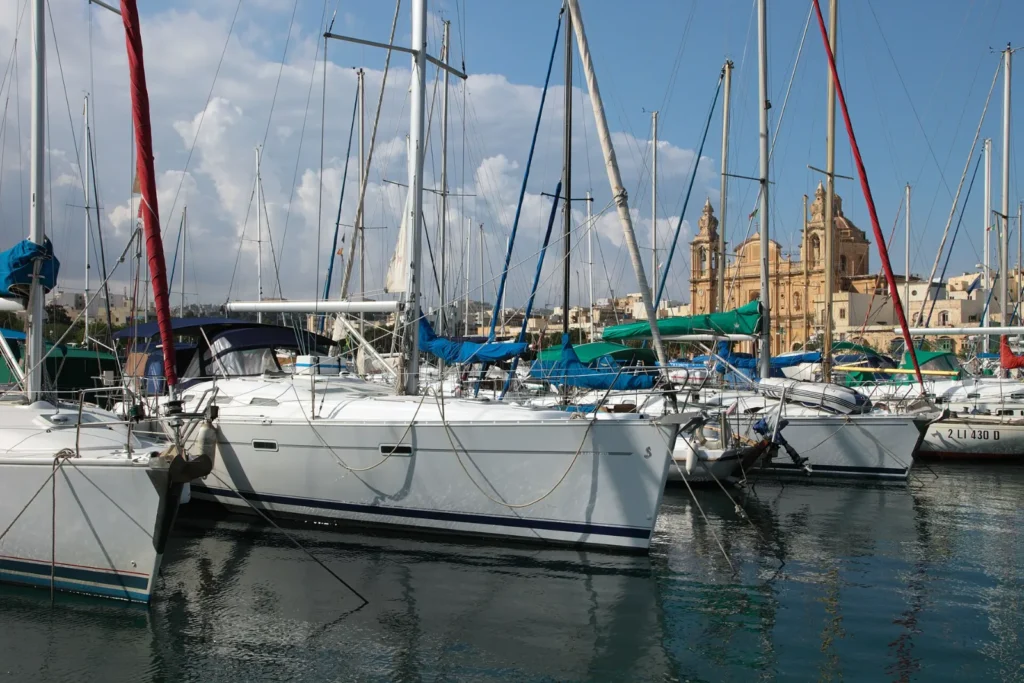
Every autumn, thousands of yachts from Scandinavia, Germany, the Netherlands and the UK head south instead of being lifted out for a northern winter. Others move within the Mediterranean, from a summer cruising ground to a safer or cheaper winter port. This guide covers where to winter, afloat or ashore, and how to get the yacht there.
Why winter a yacht in the Mediterranean?
- A longer season: April and October are pleasant sailing months in much of the Mediterranean, and some owners sail right through the winter.
- Less winter damage: no ice, and less frost and condensation inside the boat.
- A head start in spring: the yacht is already where the owner wants to cruise.
- Good yards and services: many winter ports have experienced boatyards for maintenance and antifouling.
Afloat or ashore?
| Afloat in a marina | Ashore on hard-standing | |
|---|---|---|
| Best for | Owners who want to use the yacht in winter, and liveaboards | Long absences and maintenance work |
| Main risks | Winter gales and surge in the harbour, chafe on the lines | Strong winds on a yacht on stands, dust and dirt |
| Maintenance | Hull work needs a lift | Easy access to the hull, antifouling and running gear |
| Checks | Lines, fenders and bilges | Stands, covers and drainage |
Whatever you choose, tell your insurer: many policies have conditions for the laid-up period and the place where the yacht spends the winter.
Popular places to winter a yacht in the Mediterranean
| Region | Examples | Good to know |
|---|---|---|
| Southern Spain | The Costa del Sol around Málaga, Almerimar, Cartagena | Mild winters, close to Gibraltar and an easy start for Atlantic or Mediterranean plans |
| Balearics and the Valencia coast | Palma de Mallorca, Valencia | Busy yachting hubs with good yards; book early |
| Southern France | Large hard-standing yards around the Rhône delta | Popular for ashore storage; the Mistral blows hard in winter |
| Italy | Sicily and Sardinia | Several marinas have active liveaboard communities in winter |
| Malta | Msida and the harbours around Valletta | A central position and English widely spoken; some berths are exposed to winter gales |
| Greece | Lefkas, Preveza and the Athens area | Large ashore yards in the Ionian; Greece charges a cruising tax (TEPAI) on yachts over 7 metres |
| Turkey | Marmaris and the southwest coast | Outside the EU, so check the VAT and temporary admission rules for your yacht |
Local rules on taxes, length of stay and living aboard change, so check the current rules for your flag and nationality before you book.
How to get your yacht there
From Northern Europe, the delivery south follows the classic route via the Kiel Canal or the Skagerrak, the North Sea, the English Channel, the Bay of Biscay and the Strait of Gibraltar. Timing is everything:
- July–August: leave the Baltic or the North Sea.
- August–early September: cross the Bay of Biscay before the autumn depressions build.
- September–October: pass Gibraltar and reach the winter berth.
The full route is in our delivery guide from Scandinavia to the Med. Read also how we pass Gibraltar and our advice on orcas off Spain and Portugal. Inside the Mediterranean, autumn and winter bring the Mistral, Tramontana and Bora — see our guide to the Mediterranean winds — so a delivery to a winter port is planned around short, safe weather windows.
Preparing the yacht for winter
- Service the engine and change the oil before the lay-up, not in spring.
- Protect the water system and engine cooling wherever frost is possible.
- Take off the sails and canvas, or secure them well — a furled headsail is a common source of winter damage.
- Charge the batteries and leave a safe, monitored charging set-up.
- Double the mooring lines with chafe protection, or check the stands if the yacht is ashore.
- Agree regular checks with the marina or a local caretaker.
In spring: cruise, charter or sail home
In spring, the yacht can start the season where it is, move to a charter base, or come home to Northern Europe in May or June. Our month-by-month delivery calendar shows the best windows. Owners who want a winter even further south can cross the Atlantic via the Canary Islands.
Book your autumn delivery early
Autumn is the busiest time of year for deliveries south, and the best crews and winter berths are booked early. Nordic Crew Worldwide has a base in Málaga, at the gateway to the Mediterranean, and a Scandinavian team at the northern end of the route. Tell us where your yacht is and where it should spend the winter — get a free delivery quote or read about routes across the Mediterranean.
Related guides
- How much does yacht delivery cost?
- Weather routing for yacht deliveries
- Crossing the Bay of Biscay by yacht
- Delivering a yacht to the Balearics
- Moving your yacht in winter
- Wintering in Malta
Frequently asked questions
Where is the best place to winter a yacht in the Mediterranean?
It depends on how you will use the yacht. Southern Spain and the Balearics suit owners from Northern Europe and those heading for the Atlantic, while Sicily, Malta and Greece suit those cruising the central and eastern Mediterranean. Choose a well-protected marina or a good ashore yard.
When should I leave Northern Europe to winter my yacht in the Med?
Ideally in July or August, so the yacht crosses the Bay of Biscay by early September and reaches its winter berth in September or October.
Is it better to winter a yacht afloat or ashore?
Ashore is usually best for long absences and maintenance, while afloat suits owners who want to use the yacht in winter. In both cases, choose a protected place and arrange regular checks.
Do I need to tell my insurer where my yacht spends the winter?
Yes. Many policies have conditions for the laid-up period, including where and how the yacht is stored, so tell your insurer before the winter starts.