
Short answer: a yacht delivery to Malta usually arrives from Sicily, which is less than a day’s sail to the north, from Greece and the Ionian in the east, or from Spain and Gibraltar in the west. Malta is in the EU and Schengen, so yachts from other EU ports need no customs clearance, while yachts from outside the EU clear in at their first port. The best months are April–June and September–November, and Malta is one of the most popular places in the Mediterranean to spend the winter.
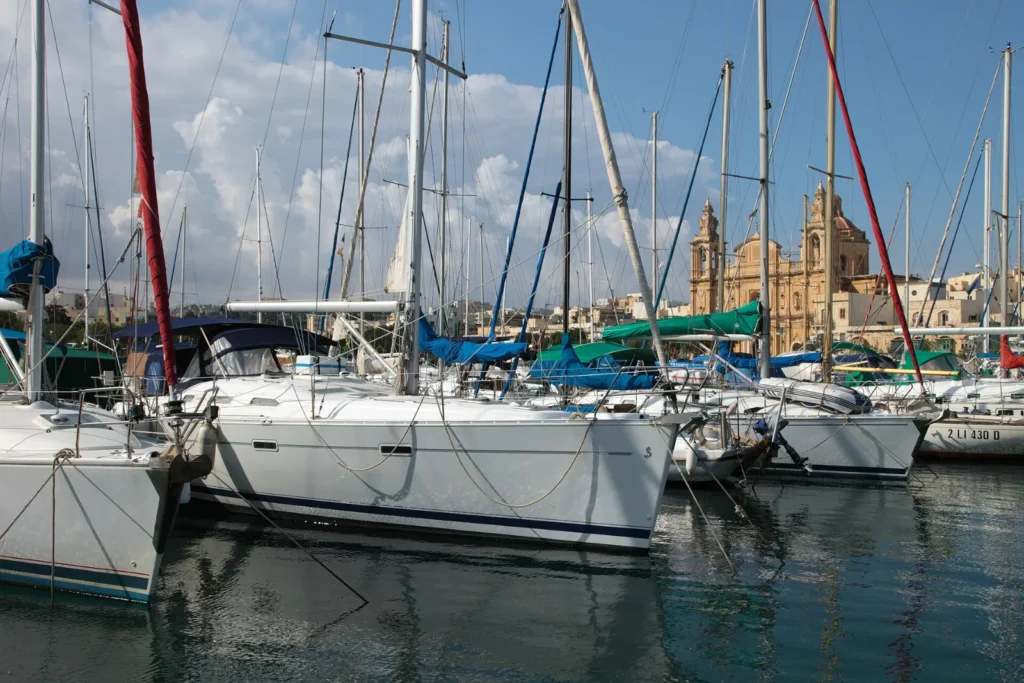
Malta sits in the middle of the Mediterranean, between Sicily and North Africa, which makes it a natural stopover on long east–west passages and a common home port. The Maltese flag is one of the largest yacht registers in Europe, the marinas around Valletta and in Gozo are busy all year, and the island’s yards carry out a lot of refit and maintenance work. As a result, yachts are delivered to Malta for registration, winter berths, refits and sales — and leave again for Greece, Italy, Croatia or the western Mediterranean.
Routes to Malta
From Sicily
The crossing from Pozzallo, Licata or Marina di Ragusa on Sicily’s south coast is around 50–60 nautical miles — a day’s sail. Yachts coming down the Italian coast and through the Strait of Messina usually take this route.
From Greece and the eastern Mediterranean
From the Ionian islands, the passage across the open Ionian Sea to Malta is around 330 nautical miles — two to three days at sea. Yachts coming from Turkey or the Aegean usually pass south of the Peloponnese first. See our guides to Greece and Turkey.
From Spain and the western Mediterranean
From Gibraltar or our base in Málaga, the route runs along the North African or Spanish coast and past Sardinia or south of it to Malta — roughly 1,000 nautical miles. With fuel and weather stops, plan on about a week to ten days. Our overview of Mediterranean routes covers the legs.
Weather: the gregale and the best season
Malta’s main weather hazard is the gregale, a strong north-easterly that blows mostly in winter. It sends a heavy swell straight into the harbours on Malta’s east coast, including Grand Harbour and Marsamxett, and has historically caused damage to boats moored there. In summer, the prevailing north-westerlies are usually moderate. April–June and September–November are the best months for a delivery, but because Malta is a popular winter base, many deliveries arrive in October and November and leave in spring.
Arriving in Malta: clearance and paperwork
- From an EU port: no customs clearance is required unless you have something to declare. Some marinas, such as Msida, may still ask to see the crew list and passports.
- From outside the EU: fly the Q flag, go straight to a port of entry without stopping, and contact customs immediately on arrival with a crew list. Third-country nationals also show their passports to immigration.
- Harbour entry: yachts entering Grand Harbour or Marsamxett must contact Valletta VTS on VHF before entering.
- Departure: before clearing out to a non-EU country, you need a receipt for the marina fees and crew lists for customs and immigration.
- Insurance and documents: registration, proof of ownership or authorisation to operate the yacht, VAT documents and insurance. See our delivery insurance checklist.
Malta has no cruising tax for visiting yachts, but marina rates are higher in the main harbours around Valletta than in Gozo.
Wintering a yacht in Malta
Malta’s mild winters, year-round flights and large marinas make it a popular place to leave a yacht from October to April. Winter berths in the best-protected marinas fill early, so book in good time, and ask the marina how well the berth is sheltered from the gregale. Read our guide to choosing a winter berth in the Mediterranean.
Yacht delivery to Malta with Nordic Crew Worldwide
Our Scandinavian captains deliver sailing yachts, motor yachts and catamarans to and from Malta, from Northern Europe, Spain, Italy, Greece and Turkey. We plan the route and the arrival around the weather, handle the clearance with you and hand the yacht over in her new berth. All deliveries are covered by our own professional skipper insurance. Request a quote for a delivery to or from Malta.
Related guides
Frequently asked questions
How long does a yacht delivery from Sicily to Malta take?
The crossing from Sicily’s south coast is around 50–60 nautical miles — usually a day’s sail.
Do I need to clear customs when arriving in Malta?
Not from another EU port, unless you have something to declare. Yachts arriving from outside the EU must contact customs at their first port with a crew list.
Is Malta a good place to winter a yacht?
Yes, it is one of the most popular winter bases in the Mediterranean. Choose a berth that is well sheltered from the gregale, the strong north-easterly winter wind.
Is there a cruising tax for yachts in Malta?
No. Malta has no cruising tax for visiting yachts, but marina fees apply and are higher around Valletta.