
Short answer: yachts usually reach the Canary Islands on one of two routes: from Gibraltar or southern Spain direct to Lanzarote or Gran Canaria (around 550–650 nautical miles), or down the Portuguese coast via Madeira. The prevailing north-easterly winds make it a mostly downwind passage. The busiest time is September to November, before the Atlantic crossings; book berths early, check orca reports along the Iberian coast, and remember the Canaries have their own tax status within the EU.
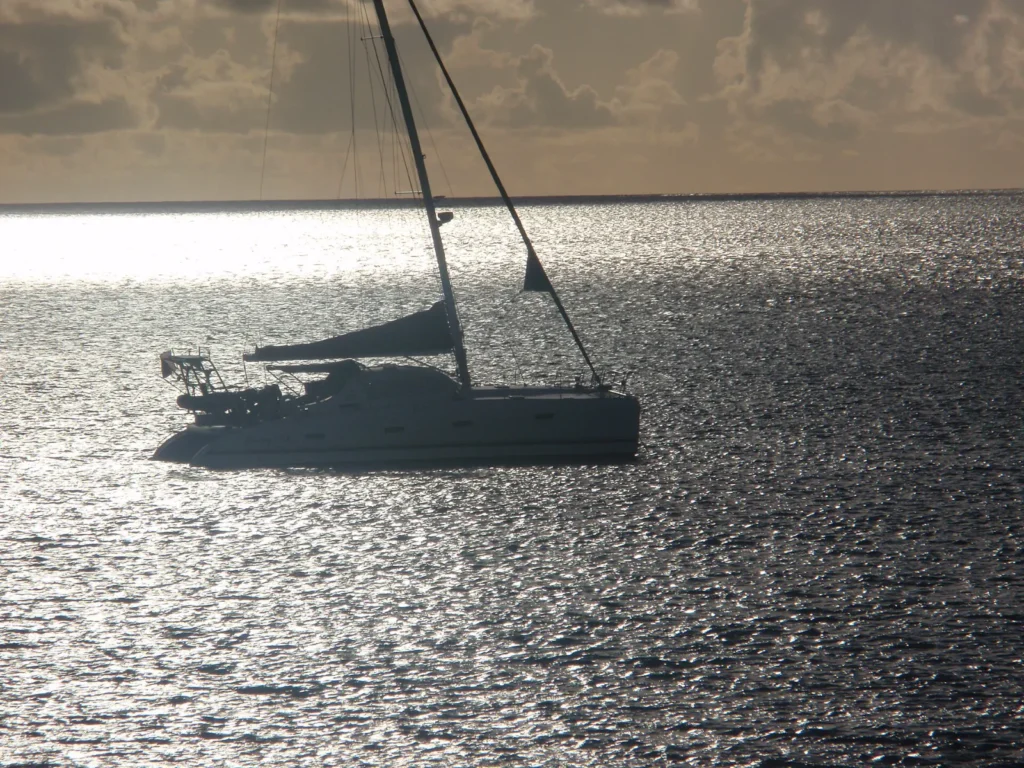
The Canary Islands are the gateway to the Atlantic: the last stop before the Caribbean for most yachts, and a popular winter base in their own right. This guide covers the routes, timing and practical points of a delivery to the Canaries.
Routes and distances
| Route | Approx. distance | Typical passage time |
|---|---|---|
| Gibraltar → Lanzarote | ~550 nm | 4–5 days |
| Gibraltar → Las Palmas (Gran Canaria) | ~650 nm | 5–6 days |
| Lisbon → Madeira | ~520 nm | 4–5 days |
| Madeira → Gran Canaria | ~280 nm | 2–3 days |
| Cádiz → Lanzarote | ~550 nm | 4–5 days |
Distances are approximate; passage times are for a typical cruising yacht under delivery and depend on the yacht and the weather.
Leaving the Mediterranean
Yachts coming from the Med first pass the Strait of Gibraltar, ideally with a light easterly (Levante) and the right tide. Read our Strait of Gibraltar guide. Many then head straight for the Canaries offshore; others follow the Moroccan coast at a distance.
Coming from Northern Europe
Yachts from Scandinavia, Germany, the Netherlands or the UK cross the Bay of Biscay, follow the Portuguese coast and often stop in Madeira or Porto Santo before the Canaries. See the Scandinavia to Mediterranean guide for the northern part of the route.
Weather and season
- Prevailing winds: north to north-easterly — the Portuguese trades and the north-east trade winds — so the passage south is usually downwind or on a broad reach.
- Acceleration zones: between the islands the wind accelerates strongly around the headlands; expect much more wind than forecast in the channels.
- Best months: late spring to autumn. September to November is busiest, as yachts gather for Atlantic crossings.
- Winter: Atlantic lows can bring strong southwesterlies and big swell.
Check the delivery calendar and our weather routing guide.
Orcas on the way south
Orca interactions with yachts have been reported along the coasts of Spain and Portugal and in the Strait of Gibraltar, mostly in spring and summer. Plan the route with the latest reports. Read our orca guide.
Berths and the Atlantic rally season
Las Palmas de Gran Canaria is the start port of the ARC, the large transatlantic rally that leaves in November. In the weeks before, marinas across the islands fill up. If your yacht will cross the Atlantic, book a berth early and plan arrival with time to prepare. See Mediterranean to Caribbean.
Tax status of the Canary Islands
The Canary Islands are part of Spain and the EU, but they are outside the EU VAT area and have their own indirect tax (IGIC). Moving a yacht between the Canaries and mainland EU can therefore have VAT and customs implications. Take professional advice for your situation; this guide is general information, not tax advice.
Preparing for the passage
- Offshore safety equipment: see the safety checklist
- Fuel for calms near the coast and for motoring between islands
- Insurance covering the Atlantic islands — check cruising limits in our insurance guide
- For motor yachts: plan range carefully — see fuel and range planning
Canary Islands deliveries from Málaga
From our base near Gibraltar, the Canaries are one of our most frequent routes. We plan the Strait, the orca areas and the arrival around the weather and berth availability. See our services or request a free quote.
Related guides
- Mediterranean to Caribbean yacht delivery
- Strait of Gibraltar passage guide
- Orca interactions off Spain and Portugal
Frequently asked questions
How far is it from Gibraltar to the Canary Islands by yacht?
About 550 nautical miles to Lanzarote and about 650 nautical miles to Las Palmas on Gran Canaria — typically four to six days for a cruising yacht.
When is the best time to sail to the Canary Islands?
Late spring to autumn. September to November is busiest, as yachts gather before Atlantic crossings, so berths should be booked early.
Are the Canary Islands in the EU VAT area?
No. The Canaries are part of Spain and the EU but outside the EU VAT area, with their own indirect tax (IGIC). Moving a yacht between the Canaries and the mainland can have tax implications.
Do yachts stop in Madeira on the way to the Canaries?
Many yachts from Portugal and Northern Europe stop in Madeira or Porto Santo, about 280 nautical miles from Gran Canaria.