
Short answer: a yacht delivery along Portugal follows roughly 450 nautical miles of exposed Atlantic coast, from the Spanish border near Baiona to the Algarve and on to Gibraltar. In summer the prevailing northerly winds — the Portuguese trades — make the trip south fast and comfortable, and the trip north slow and wet. Delivery crews also plan around river bars that close in heavy swell, the rounding of Cape St Vincent and the risk of orca interactions.
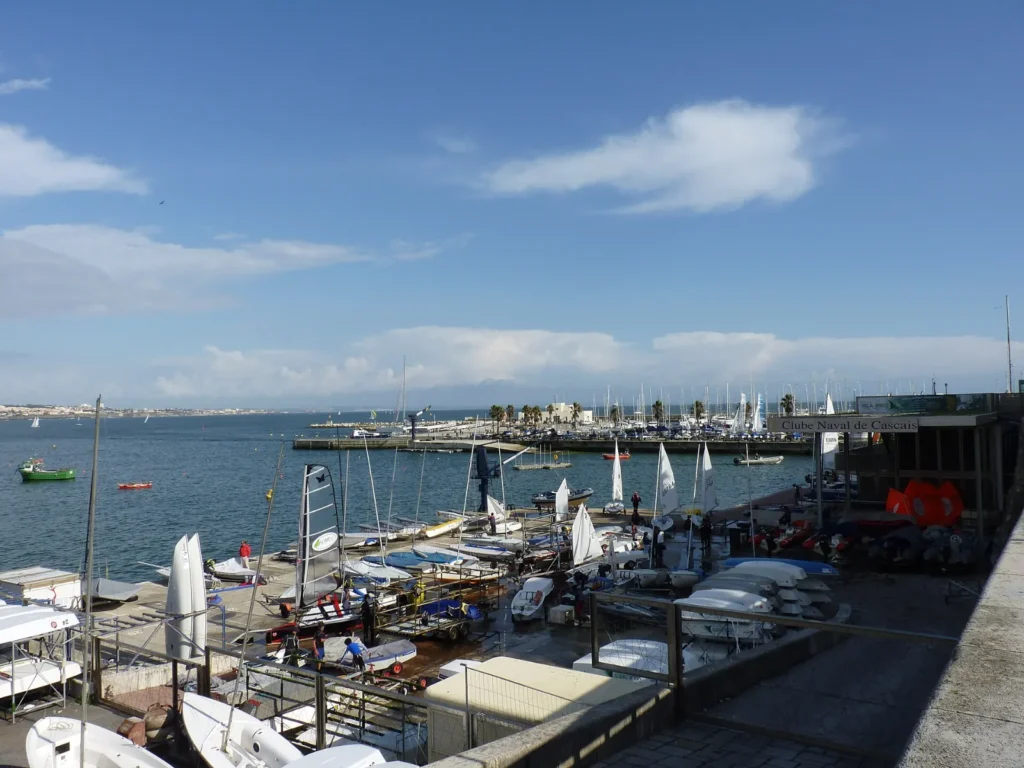
Portugal sits on the main route between Northern Europe and the Mediterranean, so most yachts sailing south from Scandinavia, Germany, the Netherlands or the UK pass its coast after crossing the Bay of Biscay. Lisbon, Cascais and the Algarve are also popular places to keep a yacht all year, with mild winters and good yards, and Portugal is the jumping-off point for Madeira and the Azores.
The route down the coast
A typical southbound delivery leaves from Baiona in Galicia and calls at a few of the main harbours on the way:
- Leixões (Porto): an all-weather harbour, and the safest stop in the north.
- Figueira da Foz, Nazaré and Peniche: the main ports along the central coast. Nazaré and Peniche can usually be entered in most conditions; river-mouth harbours such as Figueira and Aveiro may not.
- Cascais and Lisbon: the halfway point, with large marinas, yards and good connections for crew changes.
- Sines: the only real harbour on the long, exposed stretch south of Lisbon.
- Lagos, Portimão and Vilamoura: the main Algarve marinas, after rounding Cape St Vincent.
Sailing non-stop, the trip from Galicia to the Algarve takes about three days. Most deliveries stop once or twice for fuel, rest and weather.
Weather: the Portuguese trades
From May to September, a persistent northerly wind (locally called the nortada) blows down the coast, often strengthening in the afternoon and near the capes. Southbound, it gives fast downwind sailing. Northbound, it means motoring or beating into wind and swell for days, so northbound deliveries are best timed for spring or autumn, or for a gap between weather systems. In winter, Atlantic lows bring south-westerly gales and big swell.
Cape St Vincent and Cabo da Roca can accelerate the wind sharply, and the sea off the capes can be rough even in moderate conditions. Our weather routing guide explains how we plan each leg.
River bars and harbour closures
Several Portuguese harbours lie in river mouths with shallow bars at the entrance — the Douro at Porto, Aveiro and Figueira da Foz among them. In heavy Atlantic swell, breaking waves make these entrances dangerous, and the port authority can close the bar. A delivery plan must always include an alternative harbour that is safe to enter in the forecast conditions, such as Leixões, Nazaré or Cascais.
Orcas off Portugal
Since 2020, a group of orcas has interacted with yachts off Spain and Portugal every summer, sometimes damaging rudders. Orcas are protected, and it is illegal to harm or disturb them. We plan routes and timings with the latest reports in mind and follow the official safety protocols — read our orca interaction guide for the details.
Paperwork in Portugal
- Skipper licence: the skipper must hold a licence or certificate of competence that Portugal recognises for the size of yacht. EU qualifications and, for many flags, the ICC are accepted.
- Insurance: third-party liability insurance is required for most recreational craft. See our delivery insurance checklist.
- Light dues: foreign yachts pay the light and buoyage tax (Taxa de Farolagem e Balizagem, TFB). The amount depends on the yacht and how long she stays.
- Longer stays: yachts that stay in Portugal for more than 183 days a year may become liable for the annual circulation tax (IUC). Check with the Portuguese tax authority if the yacht will be kept there.
Onward to Madeira, the Azores and the Canaries
From Lisbon or the Algarve, the passage to Madeira is about 500 nautical miles and to the Canary Islands around 600. Many yachts heading across the Atlantic in autumn start from here. See our guides to the Canary Islands and the Azores route.
Yacht delivery in Portugal with Nordic Crew Worldwide
From our base in Málaga, the Algarve and Lisbon are close by. Our Scandinavian captains deliver yachts along the whole Portuguese coast and on to the Mediterranean, Northern Europe or the Atlantic islands, and all deliveries are covered by our own professional skipper insurance. Request a quote for a delivery to or from Portugal.
Related guides
Frequently asked questions
How long does a yacht delivery along the Portuguese coast take?
Galicia to the Algarve is roughly 450 nautical miles — about three days non-stop, or four to five days with stops for fuel and weather.
Is it harder to deliver a yacht north along Portugal?
Yes. In summer the northerly Portuguese trades blow against northbound yachts, so spring, autumn or a weather window between systems is usually better.
Why are some Portuguese harbours closed in bad weather?
Harbours in river mouths, such as Porto, Aveiro and Figueira da Foz, have shallow bars that become dangerous in heavy swell, and the port authority can close them.
Do foreign yachts pay fees in Portugal?
Foreign yachts pay the light and buoyage tax (TFB). Yachts staying more than 183 days a year may also become liable for the annual IUC tax.