
Short answer: yachts usually return from the Caribbean to Europe in May or June, before the hurricane season builds and once the low-pressure systems in the North Atlantic have moved further north. The classic route goes from the Eastern Caribbean (often via Bermuda) to the Azores, and from there to Portugal, Spain, Gibraltar or the UK. It is a harder, colder and less predictable passage than the downwind crossing west — expect at least one front on the way and plan for a stop in the Azores.
Many owners sail or ship their yacht to the Caribbean for the winter and then need it back in the Mediterranean or Northern Europe for the summer. The return trip is where a professional delivery crew earns its fee. This guide explains the route, the timing and how we plan it.
The route at a glance
| Leg | Typical route | Approx. distance |
|---|---|---|
| 1 | Antigua / St Maarten / BVI → Bermuda (optional) | ~850–950 nm |
| 2 | Bermuda → Azores (Horta) | ~1,800 nm |
| Alternative | Eastern Caribbean → Azores direct | ~2,200–2,500 nm |
| 3 | Azores → mainland Portugal or Gibraltar | ~800–1,000 nm |
| 3 (north) | Azores → UK / Northern Europe | ~1,200 nm to the English Channel |
When to leave the Caribbean
- Window: favourable winds for leaving the Eastern Caribbean can occur from March to mid-May; many experienced forecasters consider May to June the best time to leave the Caribbean or Bermuda.
- Why not earlier: early in the season the North Atlantic lows track further south, and a yacht heading north-east can meet strong headwinds and gales.
- Why not later: the Atlantic hurricane season officially starts on 1 June. Leaving in late June or July means watching closely for tropical waves.
- The Azores High: as summer approaches the high grows, which brings lighter winds near the Azores — good for comfort, but motor-sailing may be needed.
Route strategy
- Southern route: a conservative strategy is to head east and stay south of about 35°N until it is clear no significant system is developing, then turn north towards the Azores. The risk is running into the light winds of the Azores High.
- Northern route: larger, faster yachts with bigger crews sometimes go further north for stronger winds and a faster crossing, accepting more weather risk.
- Bermuda stop: a good option if the wind pattern changes a few days out from the Caribbean, and a chance to refuel and rest.
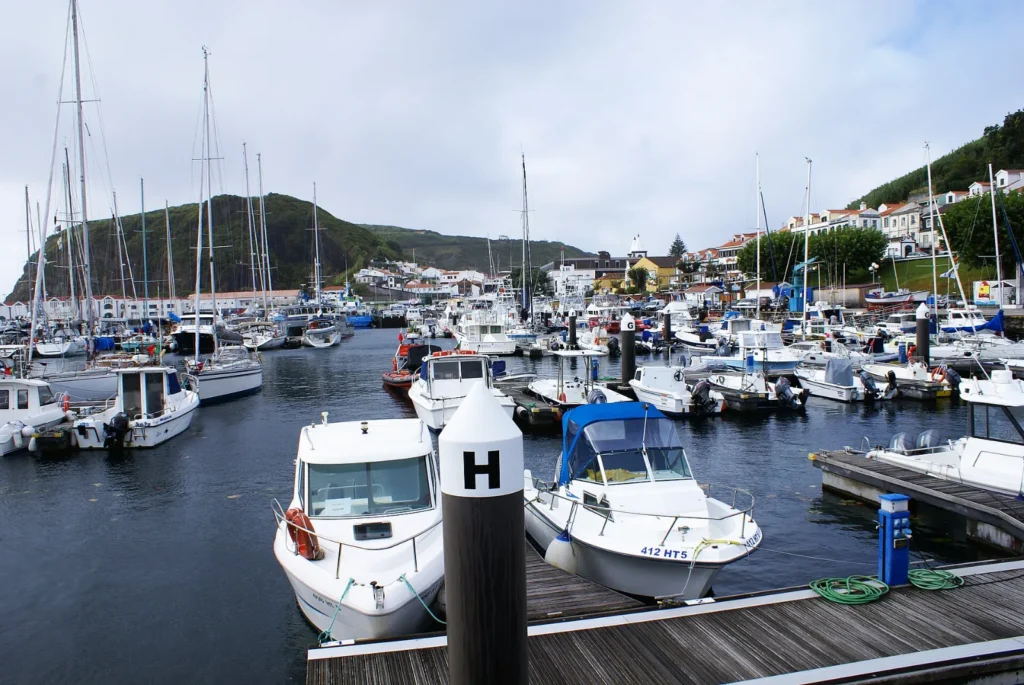
- Azores stop: almost every yacht stops in Horta (Faial) or Ponta Delgada (São Miguel) to refuel, repair and wait for the right window to the mainland.
Weather on the eastbound crossing
Unlike the trade-wind passage west, the eastbound crossing has no reliable wind system. Low-pressure systems spin off the US east coast and cross the Atlantic, and a yacht will usually be overtaken by at least one front. Up-to-date forecasts are essential: GRIB files, a professional routing service, and the barometer — recording pressure every couple of hours tells you where you are relative to the high.
Preparing the yacht and crew
- Heavy weather readiness: storm sails or deep reefs, secure stowage, jacklines and harnesses.
- Fuel: extra range for calms near the Azores High.
- Warm gear: nights get progressively colder going north — a big change after the Caribbean.
- Watch system: with colder, more tiring night watches, a rolling watch system keeps the crew fresher.
- Communication and safety: satellite communication, EPIRB, life raft and medical kit for an ocean passage.
See our yacht delivery preparation checklist for the full list.
Arriving in Europe
From the Azores, yachts bound for the Mediterranean head for Portugal or directly to Gibraltar — read our Strait of Gibraltar passage guide, and check the latest orca reports for the Iberian coast. Yachts going to Northern Europe or Scandinavia head for the English Channel, then continue up the North Sea — possibly through the Kiel Canal into the Baltic.
Sail it or ship it home?
For some yachts the return crossing is not worth the wear: shipping on a cargo vessel can make sense for motor yachts with limited range or owners who need the boat in Europe early. Read yacht delivery by sea vs. boat transport, or ask us for a quote on both options.
Related guides
Frequently asked questions
When should you sail from the Caribbean back to Europe?
Most yachts leave in May or June, after the North Atlantic lows have moved further north and before the hurricane season builds. Favourable winds can occur from March to mid-May, but earlier departures risk headwinds and gales.
What is the route from the Caribbean to Europe?
The usual route goes from the Eastern Caribbean, often via Bermuda, to the Azores, and from there to Portugal, Gibraltar or the English Channel. Bermuda to the Azores is about 1,800 nautical miles.
Is sailing from the Caribbean to Europe harder than the other way?
Yes. There is no reliable trade wind system eastbound, nights get colder, and yachts are usually overtaken by at least one front. Good weather routing and a well-prepared boat are essential.
Do yachts stop in the Azores?
Almost all yachts stop in the Azores, usually in Horta on Faial or Ponta Delgada on São Miguel, to refuel, repair and wait for a good window to mainland Europe.