
Short answer: most Mediterranean yacht deliveries follow one of a few corridors: along the Spanish and French coasts via the Balearics; across to Sardinia and Corsica and through the Strait of Bonifacio; south of Sicily or through the Strait of Messina to the Ionian Sea; then north into the Adriatic for Croatia and Montenegro, or east through the Corinth Canal or around the Peloponnese for Greece and Turkey. The winds — Mistral, Tramontana, Bora, Sirocco and Meltemi — decide when each leg is safe.
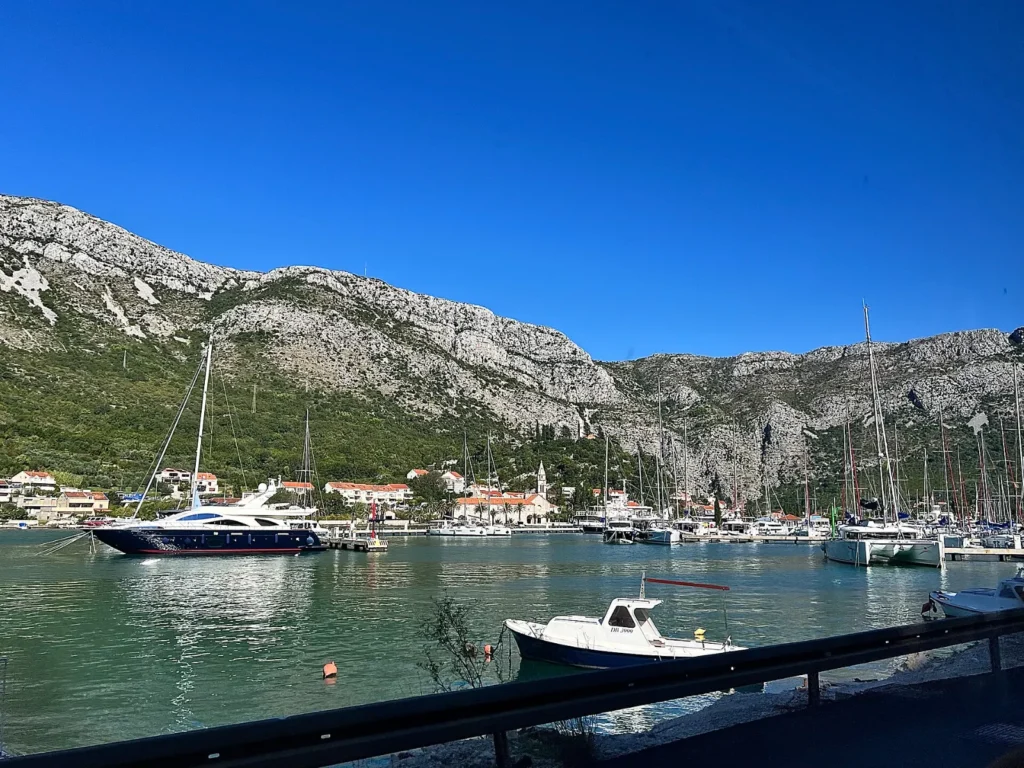
The Mediterranean looks small on a map, but a delivery from Málaga to Athens is around 1,400–1,500 nautical miles — further than crossing the Bay of Biscay four times. This guide gives an overview of the main routes and the passages that shape them.
Typical delivery routes and distances
| Route | Approx. distance | Typical duration under delivery |
|---|---|---|
| Málaga → Barcelona / Palma | ~450–500 nm | 4–6 days |
| Palma → Côte d’Azur | ~250–300 nm | 2–3 days |
| Balearics → Sardinia | ~200–250 nm | 2 days |
| Western Med → Croatia (Split) | ~1,000–1,200 nm | 9–14 days |
| Western Med → Athens | ~1,100–1,500 nm | 10–16 days |
| Croatia → Greece (Ionian) | ~350–450 nm | 3–5 days |
Distances and times are rough: they depend on the exact ports, the yacht’s speed, fuel stops and weather days.
The key passages
The Strait of Bonifacio
Between Corsica and Sardinia, the Strait of Bonifacio is a short cut from the Balearics and France to Italy. The wind accelerates strongly between the islands, especially in a westerly or Mistral, and the area has many rocks and protected waters. Transit in settled weather and follow the marked routes.
The Strait of Messina
Between Sicily and mainland Italy, the Strait of Messina saves distance on the way to the Ionian Sea and Greece. It has notable tidal currents and whirlpools for the Mediterranean, heavy ferry traffic and a traffic separation scheme. The alternative is to sail south of Sicily.
The Corinth Canal
The Corinth Canal cuts through the isthmus between the Gulf of Corinth and the Saronic Gulf, saving a long passage around the Peloponnese for yachts heading to Athens and the Aegean. It is narrow, has fees and has been closed for long periods for repairs and landslides in recent years — always check the current status before planning.
Winds that decide the timing
- Mistral and Tramontana: strong northerly winds in the Gulf of Lion and around the Balearics, most frequent in winter and spring.
- Bora: sudden, violent north-easterly gusts along the Croatian coast, mainly in winter.
- Sirocco (Jugo in Croatia): warm southerly wind bringing big seas in the Adriatic and the central Med.
- Meltemi: strong northerly summer wind in the Aegean, strongest in July and August.
- Levante and Poniente: the winds of the Alboran Sea and the Strait of Gibraltar.
Read the full Mediterranean winds guide and check the delivery calendar.
Country by country
- Spain: long coast with many marinas; the Balearics are the hub of the western Med. Our base in Málaga is close to the Strait of Gibraltar.
- France: the Côte d’Azur and Corsica; berths are expensive and scarce in summer.
- Italy: a long route east; plan fuel and berths for Sardinia, Sicily and the south.
- Malta: a convenient stop between Sicily and the eastern Med.
- Croatia and Montenegro: popular charter bases and home ports; check local entry rules and fees.
- Greece: the Ionian and Aegean; charter fleets and many private yachts; local cruising taxes apply to many yachts.
- Turkey: outside the EU — customs and immigration formalities on entry and exit.
Paperwork and fees
Within the EU, yachts move without customs formalities but must carry registration, insurance and proof of VAT status. Some countries charge cruising or sojourn fees, and leaving the EU means clearing out and in. See yacht delivery in Europe.
Motor yachts and catamarans in the Med
Motor yachts need planned fuel stops on long legs — read fuel and range planning. Catamarans need wider berths, which are scarce in high season — see the catamaran delivery guide.
Mediterranean deliveries from our Málaga base
From Málaga we deliver yachts across the whole Mediterranean and beyond. Our captains plan each leg around the local winds, fuel and berths, and keep you updated on the way. See our services or request a free quote.
Related guides
- Mediterranean Winds Explained: Mistral, Tramontana, Bora, Meltemi & Sirocco
- Strait of Gibraltar passage guide
- Charter yacht repositioning
- Yacht delivery to Croatia
- Yacht delivery to Mallorca
Frequently asked questions
How long does it take to deliver a yacht across the Mediterranean?
It depends on the route and boat. As a rough guide, the Western Mediterranean to Croatia is about 1,000–1,200 nautical miles and 9–14 days, and to Athens about 1,100–1,500 nautical miles and 10–16 days, including fuel stops and some weather days.
What is the best time for a Mediterranean yacht delivery?
Spring and autumn are often ideal. Winter brings more frequent gales such as the Mistral and Bora, and in July and August the Meltemi can blow strongly in the Aegean.
Can yachts use the Corinth Canal?
Yes, when it is open. It saves the passage around the Peloponnese, but it has fees and has been closed for long periods for repairs in recent years, so check its status before planning.
Do I need customs clearance to move a yacht between Mediterranean countries?
Not between EU member states, but the yacht must carry registration, insurance and proof of VAT status. Entering or leaving the EU, for example to Turkey or Montenegro, requires clearance.