
Short answer: winterizing a yacht after she has been delivered to her winter berth means protecting her from frost, damp and neglect until spring. The main steps are: service the engine and protect its cooling system, fill the fuel tank and treat it against diesel bug, drain or protect the fresh water system, charge and maintain the batteries, remove or protect sails and canvas, clean and ventilate the interior, and decide whether she stays afloat or comes ashore. Check your insurance for any lay-up conditions, and plan the spring recommissioning before you leave her.
Many deliveries in autumn end at a winter berth — in a boatyard in Northern Europe, or in a Mediterranean marina where the yacht waits for the next season. The delivery crew hands the yacht over in good condition, but what happens next decides how she will look in spring. This checklist covers the main winterizing steps; your yard or engine supplier will have specific advice for your yacht.
Afloat or ashore?
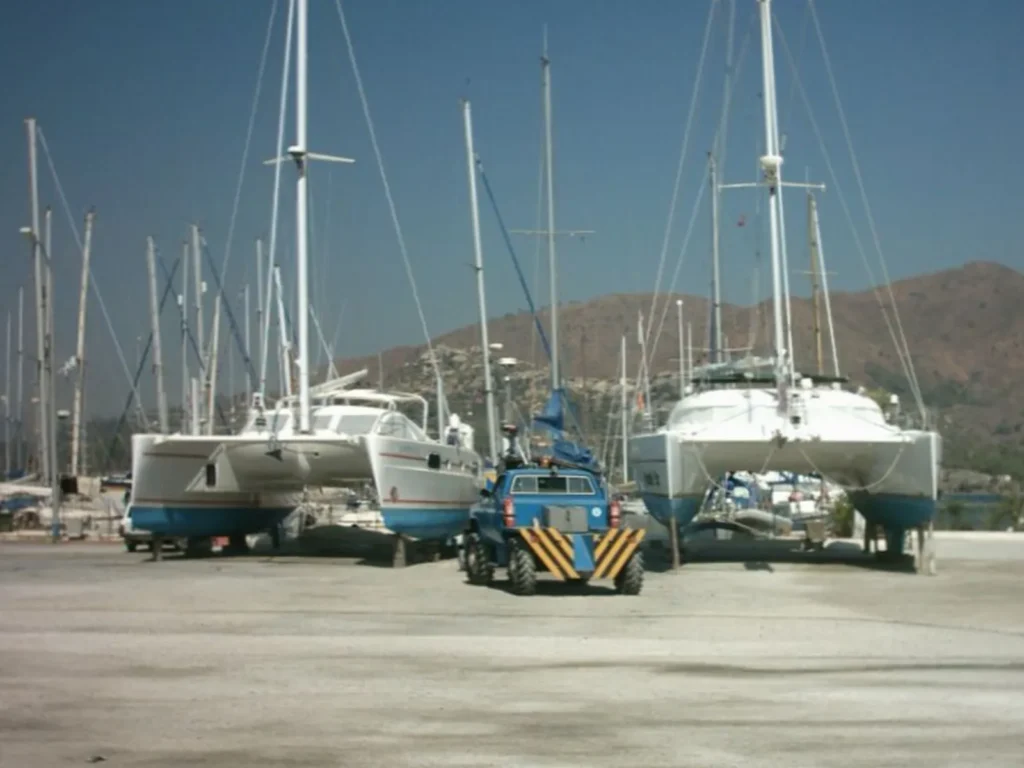
In Northern Europe, most yachts come ashore for the winter, where the hull can be cleaned, inspected and antifouled, and there is no risk from ice or storms in the marina. In the Mediterranean, many yachts stay afloat, which keeps them ready to use and is often cheaper, but they need regular checks on mooring lines, fenders, bilge pumps and batteries. Read our guide to wintering a yacht in the Mediterranean.
Engine and fuel
- Change oil and filters before the lay-up, so acidic used oil does not sit in the engine all winter.
- Protect the raw-water cooling circuit against frost in cold climates, following the engine manufacturer’s instructions, and check the freshwater coolant’s frost protection.
- Remove the impeller or follow the manufacturer’s advice, so it does not take a set.
- Fill the fuel tank to reduce condensation, and treat the fuel against diesel bug.
- Outboards and generators need the same care.
Water systems and heads
- In freezing climates, drain the fresh water tanks, pipes, water heater and pumps, or protect them with a non-toxic antifreeze suitable for drinking-water systems.
- Empty and flush the holding tank, and protect the heads and their pipes.
- Close the seacocks that are not needed, and leave a note on board saying which ones are closed.
Batteries and electrics
- Fully charge the batteries, and either keep them on a suitable maintenance charger or disconnect them.
- If the yacht stays afloat, make sure the bilge pumps have power and work automatically.
- Switch off all non-essential systems.
Sails, rig and deck
- Remove sails, clean and dry them, and store them in a dry place — or check them with a sailmaker.
- Remove sprayhoods, biminis and cushions, or protect them from UV and damp.
- Inspect the standing rigging and terminals — winter is the time for repairs. Read about rigging age in our guide to delivering an older yacht.
- Double-up mooring lines and add chafe protection if the yacht stays afloat.
Interior and damp
- Clean the interior, remove food and anything that can rot.
- Open lockers and leave the yacht ventilated, or use a dehumidifier where shore power allows.
- Cover the yacht, leaving room for air to circulate.
Insurance and paperwork
Many yacht insurance policies have a lay-up period and conditions for how the yacht must be kept, ashore or afloat. Check them, and tell your insurer if you plan to use or move the yacht in winter. See our yacht insurance guide.
Plan the spring
Before you leave the yacht, make a list of the jobs for the yard during the winter and for recommissioning in spring — and book the spring delivery early if the yacht must move to her summer cruising area. Read our delivery calendar and our guide to preparing a yacht for delivery.
Winter and spring deliveries with Nordic Crew Worldwide
Our Scandinavian captains deliver yachts to their winter berths in autumn and to their summer cruising areas in spring, across Europe and the Mediterranean — and we also deliver all year round when the weather allows. All deliveries are covered by our own professional skipper insurance. Request a quote for your autumn or spring delivery.
Related guides
- Yacht delivery in winter
- Wintering on the Costa del Sol
- Wintering in Malta
- Spring recommissioning checklist
- Diesel bug during the lay-up
- How to pick a boatyard
Frequently asked questions
How do you winterize a yacht?
Service the engine and protect its cooling system, fill and treat the fuel, drain or protect the water systems, maintain the batteries, protect sails and canvas, ventilate the interior and check your insurance conditions.
Should my yacht stay afloat or come ashore for the winter?
In Northern Europe most yachts come ashore to avoid ice and storms and allow hull work. In the Mediterranean many stay afloat, with regular checks.
Should I fill the fuel tank before the winter lay-up?
Yes. A full tank reduces condensation, and a fuel treatment helps prevent diesel bug.
Does my insurance change during the lay-up?
Many policies have a lay-up period with conditions on how the yacht is kept. Check them, and tell your insurer if you plan to use or move the yacht.