
Fire is one of the most serious emergencies at sea. Far from land there is no fire brigade, and a fire can spread quickly through fuel, wiring and fibreglass. Fire safety on a yacht is therefore about prevention first, and about having the right equipment and a clear plan if something does go wrong. This guide covers the main risks and the checks a professional delivery crew makes before leaving port.
Why fires start on yachts
A fire needs heat, fuel and oxygen, the so-called fire triangle. On a yacht, the most common sources are:
- Electrical faults: chafed cables, loose connections, overloaded circuits and poorly installed chargers or inverters.
- Engine rooms: fuel or oil leaking onto hot exhaust parts, and overheating caused by cooling water problems.
- Galley: cooking fat, unattended pans and leaking gas.
- Batteries: lithium batteries in particular can enter thermal runaway if they are damaged, overcharged or badly installed.
Fire extinguishers: the right type in the right place
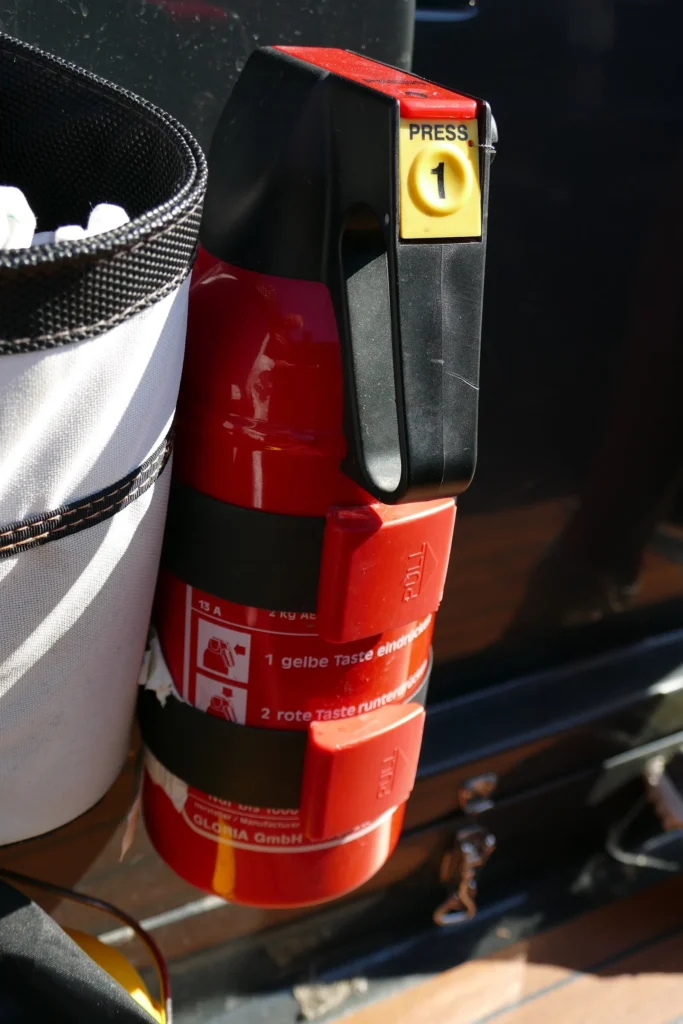
A fire extinguisher is only useful if it suits the fire and can be reached quickly. Typical choices on a yacht:
- Dry powder (ABC): versatile and common on smaller boats, but it leaves a corrosive residue that can damage engines and electronics.
- CO2: suitable for electrical fires and enclosed spaces. It displaces oxygen, so nobody should stay in a space flooded with CO2.
- Foam: effective on fuel and solid materials.
- Fire blanket: a fire blanket by the galley for pan fires.
Extinguishers should be mounted near exits, not deep inside the space they protect, so the crew can fight the fire while keeping an escape route.
Engine room fire systems
Many motor yachts have a fixed fire suppression system in the engine room, often with automatic and manual release. Before a delivery the crew checks:
- That the system is in service date and the pressure gauge is in the green.
- Where the manual release, fuel shut-offs and engine room vent closures are.
- That the crew knows to shut down engines and ventilation before releasing the system, so the agent is not drawn out.
Fuel and oil leaks are a fire risk in themselves. Our pre-departure inspection checklist covers the engine room in detail.
Gas on board
LPG (propane or butane) is heavier than air and can collect in the bilge, where a spark can ignite it. Good practice includes:
- A working gas alarm with a sensor low in the boat.
- A solenoid valve or tap that closes the gas at the bottle when the cooker is not in use.
- Regular checks of hoses and fittings, and replacing hoses that are cracked or past their date.
Lithium batteries and electric boats
More yachts now have lithium house banks, and some have electric or hybrid propulsion. These systems should have a proper battery management system, correct charging settings and good ventilation. A crew should know how to isolate the batteries and what the manufacturer recommends in case of overheating. Read more in our guide to electric and hybrid yacht deliveries. Small items such as phone and laptop chargers should also be charged where they can be watched.
If a fire breaks out
- Raise the alarm so all crew know at once.
- Shut off fuel, gas and electrical power to the affected area.
- Fight the fire only if it is small and you have a safe escape route; close hatches and doors to starve it of oxygen.
- Send a distress or urgency call early on VHF/DSC. It is better to cancel a call than to make it too late.
- Prepare the liferaft and grab bag in case you have to abandon ship.
Our offshore safety equipment checklist lists the equipment that supports these steps, and our man overboard guide covers another drill every delivery crew practises.
Fire safety before a delivery
A professional delivery crew should check the extinguishers, fire blanket, gas system and any fixed fire system before departure, and agree with the owner how to handle anything that is missing or out of date. Older boats need extra attention to wiring and fuel lines, see delivering an older or classic yacht. Our skipper insurance and your hull cover are explained in the yacht delivery insurance guide.
Related guides
- How to prepare your yacht for delivery
- Heavy weather tactics on a yacht delivery
- Yacht delivery handover checklist
Frequently asked questions
What fire extinguishers should a yacht have?
Most yachts combine dry powder or foam extinguishers for general fires with CO2 for electrical equipment, plus a fire blanket by the galley. Motor yachts often also have a fixed system in the engine room.
What is the most common cause of fire on a yacht?
Electrical faults are among the most common causes, along with fuel or oil leaks in the engine room and galley fires.
Why is LPG dangerous on a boat?
LPG is heavier than air, so a leak can collect in the bilge where a spark can ignite it. A gas alarm and a shut-off valve at the bottle reduce the risk.
Are lithium batteries safe on a yacht?
They can be, if they are installed with a battery management system, correct charging and ventilation. Damaged or badly installed lithium batteries can overheat and catch fire.