
Offshore regattas such as the Fastnet Race or the Middle Sea Race draw boats from all over Europe. For many teams the hardest part is not the race but getting the boat there on time and in race condition. A racing yacht delivery lets the race crew focus on training and work while a delivery crew moves the boat to the start, and often home again afterwards.
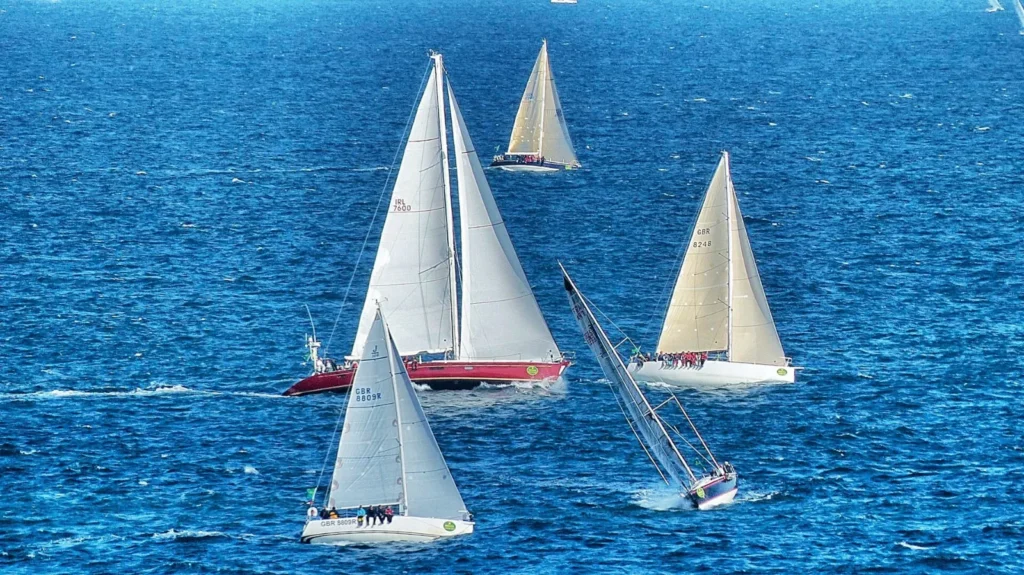
How a racing yacht differs from a cruising yacht
Racing yachts are built light and stiff for speed. That affects the delivery:
- Limited comfort: stripped interiors, minimal tankage and little storage.
- Deep draft and loaded keels: harbours and fuel docks must suit the draft, and the keel and rig need checking before an offshore passage.
- Tiller steering and small engines: many race boats have no proper autopilot and only a small engine with limited fuel range.
- High-tech sails: racing sails wear quickly and are expensive to replace.
Delivery sails and race sails
Most teams use a separate set of delivery sails, often older cruising-grade sails, and pack the race sails below or send them by road. This saves the race inventory from hundreds of miles of wear. Agree before departure:
- Which sails are used on passage and which must stay bagged.
- Where the race sails are stowed and how they are protected from chafe and water.
- Whether the spinnaker or code zero may be used at all during the delivery.
Autopilot, crew and watch system
Without a reliable autopilot, every hour has to be hand-steered. That means a larger delivery crew or fitting a temporary tiller pilot or a proper autopilot for the passage. Read our guide to crew size and watch systems for how this changes the plan.
Timing: arrive before the deadlines
Regattas have fixed dates for registration, safety inspection and measurement. A good plan works backwards from those dates:
- Add a weather margin of several days. Our article on weather delays explains why.
- Allow time after arrival for the race crew to change sails, rig and safety equipment.
- Check the race’s safety requirements early, so any missing equipment can be fitted before departure. See our offshore safety equipment checklist.
Typical regatta routes
- To the Fastnet: boats from Scandinavia and the Baltic head through the Kiel Canal or around Skagen and down the North Sea and English Channel.
- To the Mediterranean regattas: boats from northern Europe go via Biscay and Gibraltar or through the French canals. See Scandinavia to the Mediterranean.
- To Malta for the Middle Sea Race: from the western Mediterranean via Sardinia or Sicily. See our Malta yacht delivery guide.
The return delivery
After the prize-giving, the race crew usually flies home and the boat still has to get back. Booking the return delivery at the same time as the outbound trip makes it easier to plan crew and weather. Late-season returns can meet autumn gales, so read our winter yacht delivery guide if the race is in October or later.
Racing yacht deliveries with Nordic Crew Worldwide
Our Scandinavian captains deliver yachts across northern Europe and the Mediterranean. Tell us the boat, the regatta and the deadlines, and we will plan the delivery around them. Our quote guide shows what to send.
Related guides
Frequently asked questions
Can you deliver a racing yacht to a regatta?
Yes. A delivery crew moves the boat to the regatta, usually under delivery sails, so it arrives on time and the race sails are saved for racing.
What are delivery sails?
Delivery sails are an older or cruising-grade set used on passage. They protect the expensive race sails from wear during a long delivery.
Does a racing yacht need an autopilot for a delivery?
It is strongly recommended. Without one, every hour must be hand-steered, which needs a larger crew. A temporary tiller pilot is often fitted for the passage.
When should the boat arrive before a regatta?
It should arrive with enough margin for weather delays and for the race crew to prepare the boat before registration and safety checks. Several days is usual.