Short answer: on a professional yacht delivery, man overboard is handled first by prevention: lifejackets with harnesses and tethers, jacklines rigged before departure, and clipping on at night and in rough weather. If someone does go overboard, the crew follows a rehearsed routine: shout “man overboard”, keep pointing at the person, press the MOB button on the chartplotter, throw a lifebuoy or danbuoy, turn the yacht back with a practised manoeuvre, approach carefully with the propeller in mind, and recover the person with a sling, ladder or tackle. Every crew briefs and practises this before leaving.
Falling overboard is one of the most serious emergencies at sea, especially at night, in cold water or far offshore. On a delivery, where the crew often sails day and night with small watches, the best protection is a set of simple habits and the right equipment. This guide explains how professional delivery crews prevent man overboard situations, and what they do if one happens.
Prevention: staying on board
- Lifejackets: automatic inflatable lifejackets with crotch straps, lights and sprayhoods, worn on deck whenever conditions require it — and always at night and in rough weather.
- Harness and tether: crew clip on before leaving the cockpit, and clip on in the cockpit at night and in heavy weather.
- Jacklines: rigged from bow to stern before departure, so crew can move forward while staying clipped on.
- Rules on watch: nobody goes forward alone at night without telling the watch partner, and no one leaves the cockpit without a lifejacket.
- Good habits: one hand for yourself and one for the boat, and reefing early rather than late.
Equipment for a man overboard
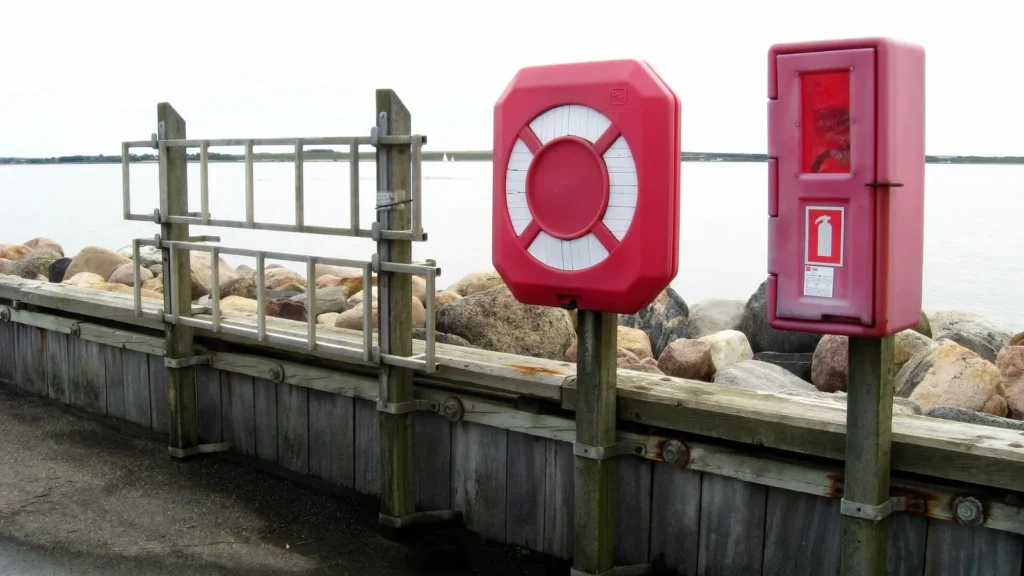
- A lifebuoy or horseshoe buoy with a light, and a danbuoy that can be seen in waves.
- Personal AIS MOB beacons or PLBs fitted to lifejackets, which send the person’s position to the yacht’s plotter and nearby ships.
- An MOB button on the chartplotter to mark the position instantly.
- A throwing line, a recovery sling such as a Lifesling, and a ladder or tackle to lift the person back on board.
Our offshore safety equipment checklist lists everything we expect on board.
The man overboard routine
- Shout “man overboard” to alert the whole crew.
- Point and watch: one person keeps pointing at the person in the water and never looks away.
- Mark the position: press the MOB button on the chartplotter.
- Throw: the lifebuoy and danbuoy, as close to the person as possible.
- Turn back: under sail, often with a quick-stop manoeuvre, or under engine — the crew uses the manoeuvre it has practised on that yacht.
- Call for help: a Mayday or DSC alert on the VHF if the person is not recovered quickly, in cold water, at night or far offshore.
- Approach and recover: come alongside slowly, keep the propeller well clear of the person, attach a sling or line, and lift the person on board.
Cold water
Cold water is dangerous long before hypothermia sets in. In the first minute, cold shock can cause gasping and panic; after around ten minutes, muscles weaken and swimming becomes difficult. A lifejacket keeps the airway clear during these first critical minutes, which is why it matters so much in the North Sea, the Baltic or a winter delivery. Read our guide to yacht delivery in winter.
Briefing and drills
Before every delivery, our skipper runs a safety briefing: where the equipment is, how the MOB routine works on this yacht, who does what, and how to raise the alarm. Where conditions allow, the crew practises the manoeuvre with a fender or buoy before the first offshore leg. Read about life on board a delivery and our watch systems.
Safety first with Nordic Crew Worldwide
Our Scandinavian captains run every delivery with clear safety routines, from the first briefing to the handover. All deliveries are covered by our own professional skipper insurance. Request a quote for your yacht delivery.
Related guides
- Weather routing for deliveries
- How to choose a delivery skipper
- Joining your own yacht delivery
- Fire safety guide for delivery crews
- Night sailing safety guide
Frequently asked questions
What is the man overboard procedure on a yacht?
Shout “man overboard”, keep pointing at the person, press the MOB button, throw a lifebuoy or danbuoy, turn back with a practised manoeuvre, call for help if needed and recover the person with a sling, ladder or tackle.
How do delivery crews prevent man overboard?
With lifejackets, harnesses and tethers, jacklines rigged before departure, and clear rules such as always clipping on at night and in rough weather.
What MOB equipment should a yacht carry?
A lifebuoy with a light, a danbuoy, personal AIS MOB beacons or PLBs, a throwing line, a recovery sling and a way to lift a person back on board.
Why is cold water so dangerous?
Cold shock in the first minute can cause gasping and panic, and within minutes muscles weaken. A lifejacket keeps the airway clear in those first critical minutes.