
Thunderstorms are among the most unsettling weather a delivery crew can meet. They bring sudden squalls, heavy rain, poor visibility and the risk of lightning at sea, where a yacht’s mast is often the tallest point for miles. Lightning strikes on yachts are relatively rare, but the damage can be expensive. This guide explains how crews avoid storms, handle them and check the boat afterwards.
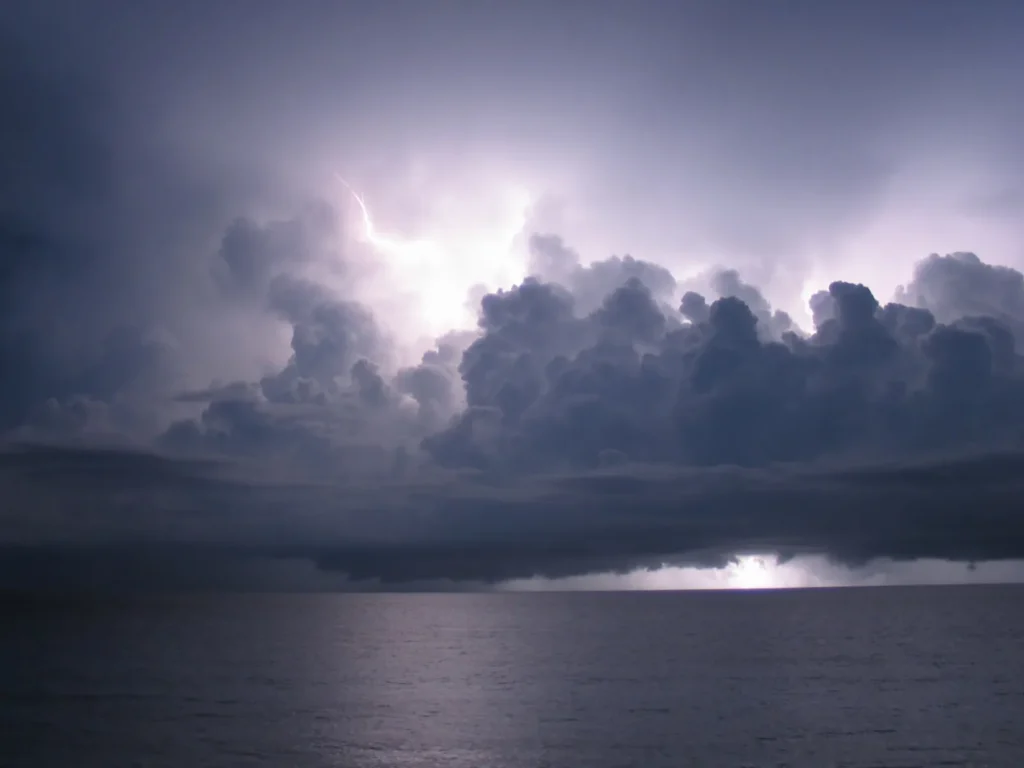
Where and when thunderstorms occur
Thunderstorms grow from towering cumulonimbus clouds. In Europe they are most common:
- In the Mediterranean from late summer into autumn, when the sea is still warm and cooler air arrives.
- Along cold fronts in the North Sea and the Atlantic.
- Over land on hot afternoons, drifting out to sea in the evening.
Read our Mediterranean winds guide for the seasonal patterns.
Avoiding storms through planning
- Check forecast warnings for thunderstorms and instability before each leg, not just the wind forecast. Our weather routing guide explains how.
- Use lightning maps and satellite or radar images where you have internet access.
- Consider delaying departure or stopping in port if a line of storms is forecast. See weather delays on a delivery.
Signs of an approaching storm
- Tall, anvil-shaped clouds and a dark, rolling base.
- Thunder or flashes on the horizon at night.
- Radar echoes and sudden changes in wind direction.
- Crackling on AM or VHF radio.
Preparing for the squall
The wind often arrives before the rain. A squall can bring a sudden jump in wind speed and a shift in direction within minutes. Before it hits:
- Reef early or take down sail, and start the engine on a sailing yacht.
- Close hatches and secure loose items.
- Put on lifejackets and clip on.
- Note your position and plot a course with sea room away from land and other vessels.
For more on rough conditions, see heavy weather tactics on a delivery.
Protecting the crew from lightning
- Keep the crew below or in the middle of the cockpit, away from the mast, shrouds and other large metal parts.
- Avoid touching metal fittings, the wheel and the guardrails where possible.
- Do not stand with one hand on two different metal parts at the same time.
Protecting electronics
A strike, or even a nearby one, can damage electronics through induced current. Common precautions:
- Disconnect antenna cables and switch off non-essential electronics.
- Keep a handheld VHF and GPS in a metal box or the oven as a backup.
- Write down your position on paper regularly.
Some yachts have a lightning protection system that bonds the mast to an underwater ground plate, similar in principle to a lightning rod ashore. Whether it helps depends on correct installation.
After a lightning strike
- Check the crew for injuries and give first aid. Call for help if needed.
- Check the bilge immediately. A strike can damage through-hulls or the hull itself and cause leaks.
- Test the compass, navigation electronics, radio and engine.
- Inform the owner and the insurer, and have the boat hauled out and inspected as soon as practical, even if no damage is visible.
See our yacht delivery insurance guide and breakdowns and repairs during a delivery.
Safety on every Nordic Crew Worldwide delivery
Our Scandinavian captains hold professional Master certificates and plan each leg around the forecast. Read more in our offshore safety equipment checklist and night sailing guide.
Related guides
Frequently asked questions
Is a yacht safe in a lightning storm?
Lightning strikes on yachts are relatively rare, but they can damage electronics and the hull. Keeping the crew away from metal parts, protecting electronics and avoiding storms through planning reduce the risk.
What should you do on a sailboat during a thunderstorm?
Reef or drop sail before the squall, start the engine, close hatches, clip on and keep the crew away from the mast and rigging. Disconnect antennas and keep a handheld VHF and GPS protected.
What should be checked after a lightning strike on a boat?
Check the crew first, then the bilge for leaks, then the compass, electronics, radio and engine. The boat should be hauled out and inspected, even if no damage is visible.
When are thunderstorms most common in the Mediterranean?
Mainly from late summer into autumn, when the sea is still warm and cooler air arrives from the north.