
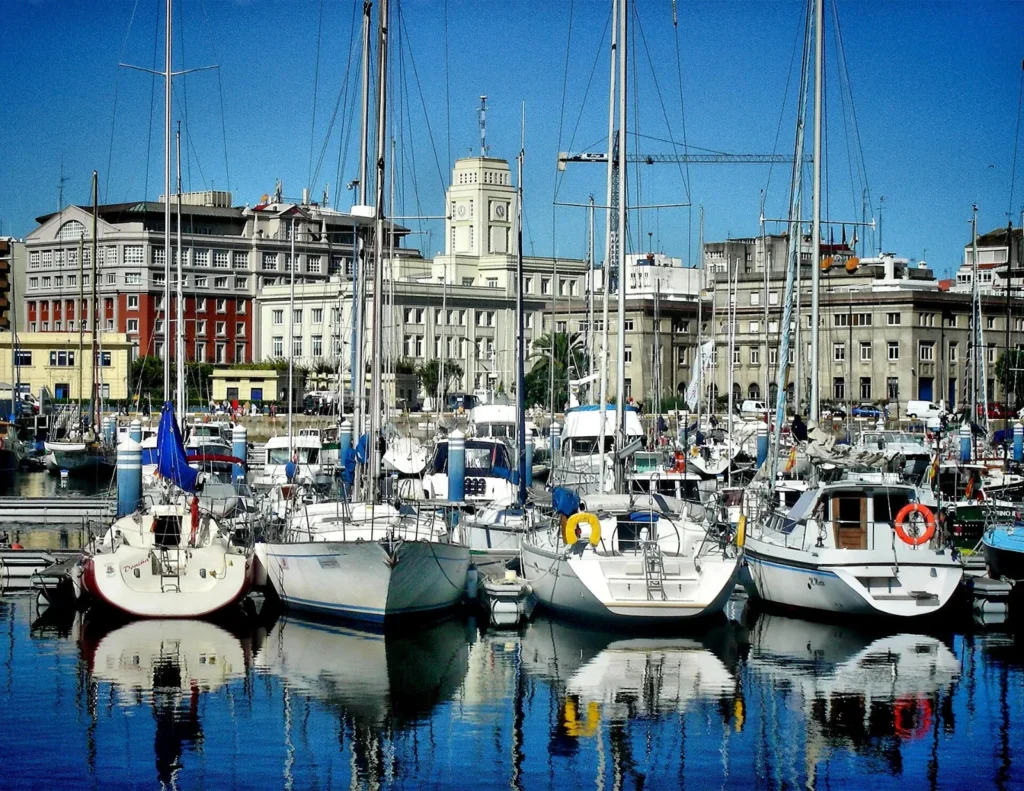
Galicia, in the north-west corner of Spain, is where most yachts arrive after crossing the Bay of Biscay and where the Atlantic route south to Portugal and the Mediterranean begins. A yacht delivery to or from Galicia usually passes through A Coruña, Vigo or one of the sheltered rías in between. This guide covers the routes, the headlands and the rules that shape passage planning on this coast.
Why Galicia matters on the Atlantic route
A Coruña is the natural landfall after a Biscay crossing from Brittany. Further south, Vigo and the Rías Baixas offer well-equipped marinas and good shelter. Boats heading from northern Europe to the Mediterranean, Madeira or the Canaries often stop here to refuel, rest the crew and wait for weather.
Common routes and typical distances
Distances are approximate and depend on the exact ports and the weather.
- Brittany – A Coruña: roughly 300–350 nm across the Bay of Biscay. Read our Bay of Biscay crossing guide.
- A Coruña – Vigo: around 110–130 nm via Cape Finisterre.
- Vigo – Lisbon: about 220–240 nm down the Portuguese coast. See our Portugal yacht delivery guide.
- Galicia – Madeira or the Canaries: a longer offshore leg. See Madeira and the Canary Islands delivery guide.
From the French Atlantic coast, our La Rochelle and French Atlantic guide covers the start of the route.
Cape Finisterre and the Costa da Morte
Cape Finisterre is the key headland on this coast. The stretch from Malpica to Finisterre is known as the Costa da Morte, the “Coast of Death”, because of its long history of shipwrecks. For a delivery crew this means:
- Large Atlantic swell, fog and strong northerly winds in summer, which can accelerate around the cape.
- Heavy commercial traffic in the offshore traffic separation scheme. Yachts usually stay inshore of it. See our traffic separation scheme guide.
- Rocky shores with few harbours of refuge, so the passage is planned in daylight or with a generous offing.
The Rías Baixas and the national park
The four southern rías, Muros e Noia, Arousa, Pontevedra and Vigo, give sheltered water and many marinas. Several islands at their entrances, including Cíes and Ons, form the Atlantic Islands of Galicia National Park. Visits require prior authorisation from the Galician government, and anchoring is regulated. Delivery crews plan stops in marinas unless the permits are arranged in advance.
Orcas off Galicia and Portugal
Since 2020, a group of Iberian orcas has interacted with sailing yachts between Galicia and the Strait of Gibraltar, sometimes damaging rudders. Delivery crews follow the official advice and check recent sighting reports before each leg. Read our guide to orca interactions off Spain and Portugal.
Weather and season
- Late spring and summer are the main season for Biscay crossings and the trip south.
- In summer the Portuguese trades (the “nortada”) give fast downwind sailing south but hard work going north.
- From autumn, Atlantic depressions bring big swell. See weather routing and the yacht delivery calendar.
Plan your Galicia delivery with Nordic Crew Worldwide
Galicia is a key stop on the route between northern Europe and our base in Málaga. Our Scandinavian captains plan each leg around weather windows, traffic and orca advice. Read UK to the Mediterranean for the full route, or see our quote guide to get a price.
Related guides
Frequently asked questions
How far is it from Brittany to A Coruña by yacht?
Roughly 300–350 nautical miles across the Bay of Biscay, depending on the departure port. Most yachts need two to three days.
Do I need a permit to visit the Cíes Islands by boat?
Yes. The islands are part of the Atlantic Islands of Galicia National Park, and visits require prior authorisation from the Galician government. Anchoring is regulated.
Why is it called the Costa da Morte?
The coast between Malpica and Cape Finisterre has a long history of shipwrecks, caused by rocky shores, Atlantic swell, fog and strong winds.
Are there orcas off Galicia?
Yes. Since 2020, Iberian orcas have interacted with sailing yachts between Galicia and the Strait of Gibraltar. Crews follow official advice and check recent sightings before each leg.