
Short answer: a traffic separation scheme (TSS) is a set of one-way shipping lanes in busy waters such as the Dover Strait, off Ushant, off Cape Finisterre and in the Strait of Gibraltar. Under Rule 10 of the international collision regulations (COLREGs), a yacht should avoid the lanes where possible, use the inshore traffic zone if there is one, and — if she must cross — cross on a heading as nearly as practicable at right angles to the traffic flow. Sailing vessels and vessels under 20 metres must not impede ships following a lane. Crossing correctly, with a good lookout, AIS and a radio watch, is a routine part of many deliveries.
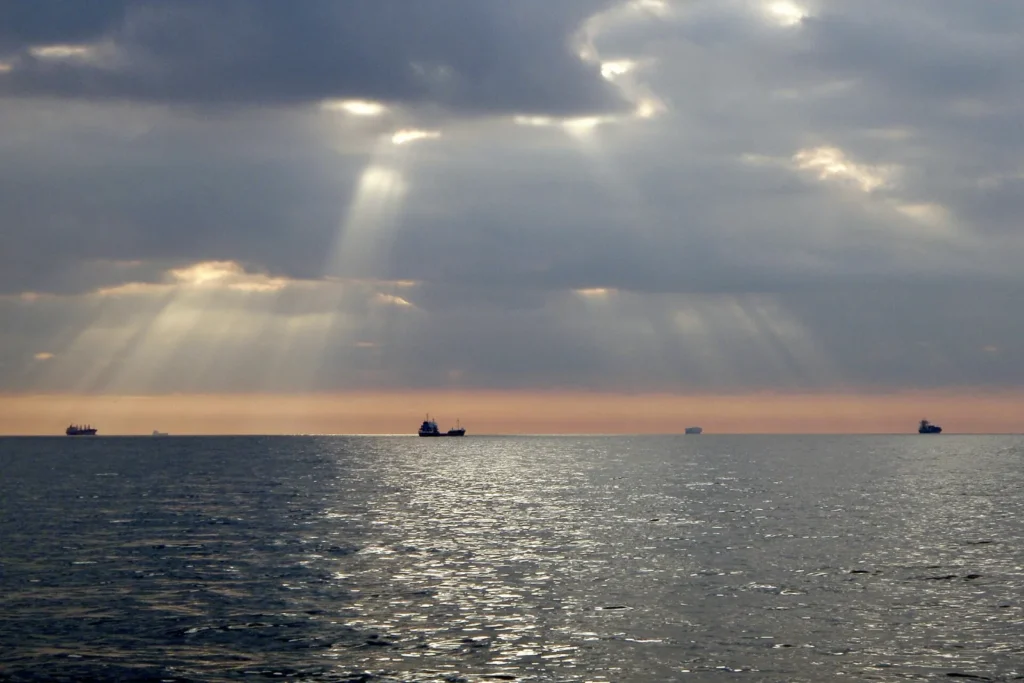
Many European delivery routes pass some of the busiest shipping lanes in the world. Large ships in a traffic separation scheme travel fast, follow predictable tracks and cannot easily change course, so a yacht that crosses badly creates real danger — and authorities do fine yachts that break the rules. This guide explains how a professional crew plans and makes a crossing.
Where yachts meet traffic separation schemes in Europe
- The Dover Strait: one of the busiest shipping lanes in the world, between England and France, monitored by Dover Coastguard and CROSS Gris-Nez. See our English Channel and North Sea guide.
- Off Ushant: at the western entrance to the Channel, where ships turn into or out of the Channel.
- Off Cape Finisterre: on the north-west corner of Spain, on the route across or around the Bay of Biscay. Read our Biscay guide.
- The Strait of Gibraltar: the gateway to the Mediterranean. Read our Strait of Gibraltar guide.
- The North Sea and Baltic approaches: schemes off the Dutch and German coasts and in the routes towards Skagen and the Danish straits.
The key rules (COLREG Rule 10)
- Avoid the scheme where possible, and keep clear of its separation zones.
- Use the inshore traffic zone: sailing vessels and vessels under 20 metres may use it, and it is usually the safer place for a yacht going along the coast.
- Cross at right angles: when crossing, steer a heading as nearly as practicable at right angles to the general direction of the traffic flow — even if the tide sets the yacht sideways, the heading is what counts.
- Do not impede: sailing vessels and vessels under 20 metres must not impede the safe passage of a power-driven vessel following a traffic lane.
- Joining or leaving: if a yacht must use a lane, she joins or leaves at the end, or at as small an angle as possible, and follows the direction of traffic.
How we plan a crossing
- Choose the crossing point: usually where the scheme is narrowest, to spend as little time as possible in the lanes.
- Time it: with the tide and in good visibility, preferably in daylight, and never with a tired crew.
- Use the engine: motor-sailing gives a steady speed and the ability to respond quickly.
- Lookout and AIS: a dedicated lookout, AIS showing ships’ courses and closest points of approach, and radar in poor visibility.
- Radio watch: listening to the VHF channel of the local traffic service, and calling a ship early if the situation is unclear.
Our guides to watch systems and life on board a delivery explain how the crew stays alert on these legs.
Why it matters for owners
A professional skipper knows these rules by heart, and plans busy crossings as carefully as the weather. It is one of the reasons owners choose a professional crew for routes through the Dover Strait, past Ushant or through Gibraltar — read our guide to choosing a delivery skipper.
Deliveries through Europe’s busiest waters with Nordic Crew Worldwide
Our Scandinavian captains cross the Dover Strait, Ushant, Finisterre and Gibraltar on deliveries between Northern Europe and the Mediterranean, and plan every crossing for safety and compliance. All deliveries are covered by our own professional skipper insurance. Request a quote for your yacht delivery.
Related guides
- Man overboard prevention and recovery
- UK to Mediterranean yacht delivery
- Heavy weather tactics
- Reading ship lights at night
Frequently asked questions
How should a yacht cross a traffic separation scheme?
On a heading as nearly as practicable at right angles to the traffic flow, as quickly as possible, without impeding ships following the lanes.
Can a sailing yacht use the inshore traffic zone?
Yes. Sailing vessels and vessels under 20 metres may use the inshore traffic zone, which is usually the safer option along the coast.
Can a yacht be fined for breaking traffic separation rules?
Yes. Authorities monitor busy schemes such as the Dover Strait, and yachts have been fined for sailing the wrong way or crossing incorrectly.
Which traffic separation schemes do yachts meet in Europe?
The Dover Strait, off Ushant, off Cape Finisterre, the Strait of Gibraltar and several schemes in the North Sea and Baltic approaches.