
Short answer: a yacht delivery to or from Turkey means leaving or entering the EU. The yacht must arrive at an official Turkish port of entry, such as Marmaris, Bodrum, Fethiye or Antalya, where the transit log is issued and the yacht is entered in the captain’s or owner’s passport. On the way back into the EU, the yacht clears customs at her first EU port, and her VAT status must be documented. The best delivery seasons are spring and autumn, outside the strongest summer meltemi.
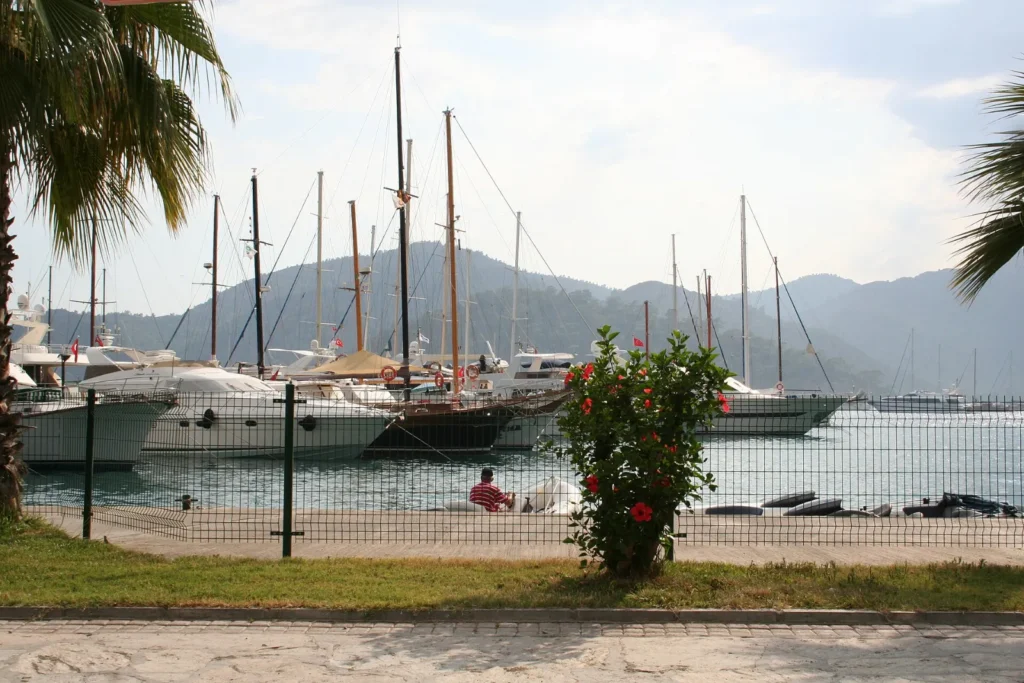
Turkey’s south-west coast — from Bodrum and Marmaris to Göcek, Fethiye and Antalya — is one of the Mediterranean’s great cruising grounds, with large marinas, competitive yard prices and a long season. Many European owners keep their yachts there, and many yachts are bought, built or refitted there. That makes Turkey a frequent start and end point for deliveries to Greece, the rest of the Mediterranean and Northern Europe.
Routes to and from Turkey
Via the Greek islands
The shortest route between Turkey and the rest of Europe runs through the Dodecanese and the Aegean. Greek islands such as Rhodes, Kos and Symi are only a few miles off the Turkish coast. Every crossing between the two countries is an international border crossing, so the yacht clears out of one country and into the other each time. Our Greece delivery guide covers the Greek side, including the TEPAI cruising tax.
To the western Mediterranean
Westbound yachts usually cross the Aegean, pass south of the Peloponnese or through the Corinth Canal, cross the Ionian Sea to Sicily and continue through the Strait of Messina or south of Sicily towards Sardinia, the Balearics and Gibraltar. From Marmaris to Málaga is roughly 1,700 nautical miles — about two to three weeks with stops.
To Northern Europe
A delivery from Turkey to Scandinavia, Germany or the UK continues from Gibraltar up the Atlantic coast and across the Bay of Biscay. See our Scandinavia–Mediterranean route guide for the northern legs.
Weather: the meltemi
In July and August, the meltemi blows from the north across the Aegean, often at 25–35 knots for days at a time. It makes northbound and westbound passages through the Aegean hard work, so we plan deliveries for May–June or September–October where possible. Along Turkey’s southern coast, summer winds are usually lighter, with afternoon sea breezes. Winter brings southerly gales and rain, but deliveries are possible with a flexible schedule. Read more in our guide to Mediterranean winds.
Entering Turkey: ports of entry and the transit log
- Port of entry: a foreign yacht must enter and leave Turkey only through an official port of entry. On the south-west coast these include Bodrum, Marmaris, Fethiye and Antalya.
- Transit log: the yacht registration form (transit log) is issued on arrival, usually electronically and often through a local agent. It records the yacht, the crew and the captain.
- Passport entry: customs records the yacht in the owner’s or captain’s passport, and the record is cancelled when the yacht leaves Turkey or is laid up in a marina.
- Visas: crew must meet Turkey’s visa rules for their nationality.
- Blue Card: in many areas, yachts must use the Blue Card system to record the pump-out of black water at approved stations. Discharging waste at sea brings heavy fines.
Leaving Turkey: VAT and EU customs
Because Turkey is outside the EU, VAT is the most important question for any delivery from Turkey into the EU. A yacht with EU VAT paid can normally return under returned goods relief if she has been outside the EU for less than three years. A yacht without EU VAT paid, or bought in Turkey, may have to pay import VAT on arrival or be placed under temporary admission if the owner lives outside the EU. We make sure the documents are in order before departure and clear customs at the first EU port. Our guide to buying a yacht abroad explains the VAT points to check.
Leaving a yacht in Turkey
A foreign owner can leave a yacht in a licensed Turkish marina while away, for maintenance or storage, under customs supervision. Rules on how long she can stay and how often she must be used apply, so check the current requirements with the marina before planning a longer stay. Read about choosing a winter berth in our guide to wintering in the Med.
Yacht delivery to and from Turkey with Nordic Crew Worldwide
Our Scandinavian captains deliver sailing yachts, motor yachts and catamarans between Turkey, Greece, the rest of the Mediterranean and Northern Europe. We plan the route around the meltemi, work with local agents on the clearance and check the VAT position with you before departure. All deliveries are covered by our own professional skipper insurance. Request a quote for a delivery to or from Turkey.
Related guides
Frequently asked questions
Do I need a transit log to deliver a yacht to Turkey?
Yes. A foreign yacht receives a transit log (yacht registration form) at her Turkish port of entry, usually electronically and often with the help of a local agent.
Does a yacht from Turkey pay VAT when entering the EU?
It depends on her VAT status. An EU-VAT-paid yacht that has been outside the EU for less than three years can usually return VAT-free. Other yachts may owe import VAT or use temporary admission.
When is the best time for a yacht delivery from Turkey?
May–June and September–October, before and after the strong summer meltemi in the Aegean.
How long does a yacht delivery from Turkey to Spain take?
From Marmaris to Málaga is roughly 1,700 nautical miles — around two to three weeks, depending on the yacht and the weather stops.